

There’s something suspiciously perfect about Sighișoara. Like it was handcrafted by a team of medieval architects with an eye for color, cobblestones, and dramatic towers. It’s the kind of place where time slows down, but your camera shutter speeds up.
We—an Italian-Romanian couple armed with optimism, caffeine, and a mildly chaotic motorhome—rolled into town with no real plan, no campsite booking (as usual), and high hopes for some history, good food, and maybe a surprise or two. Sighișoara delivered all that… and a slightly steep hill we had to climb daily.
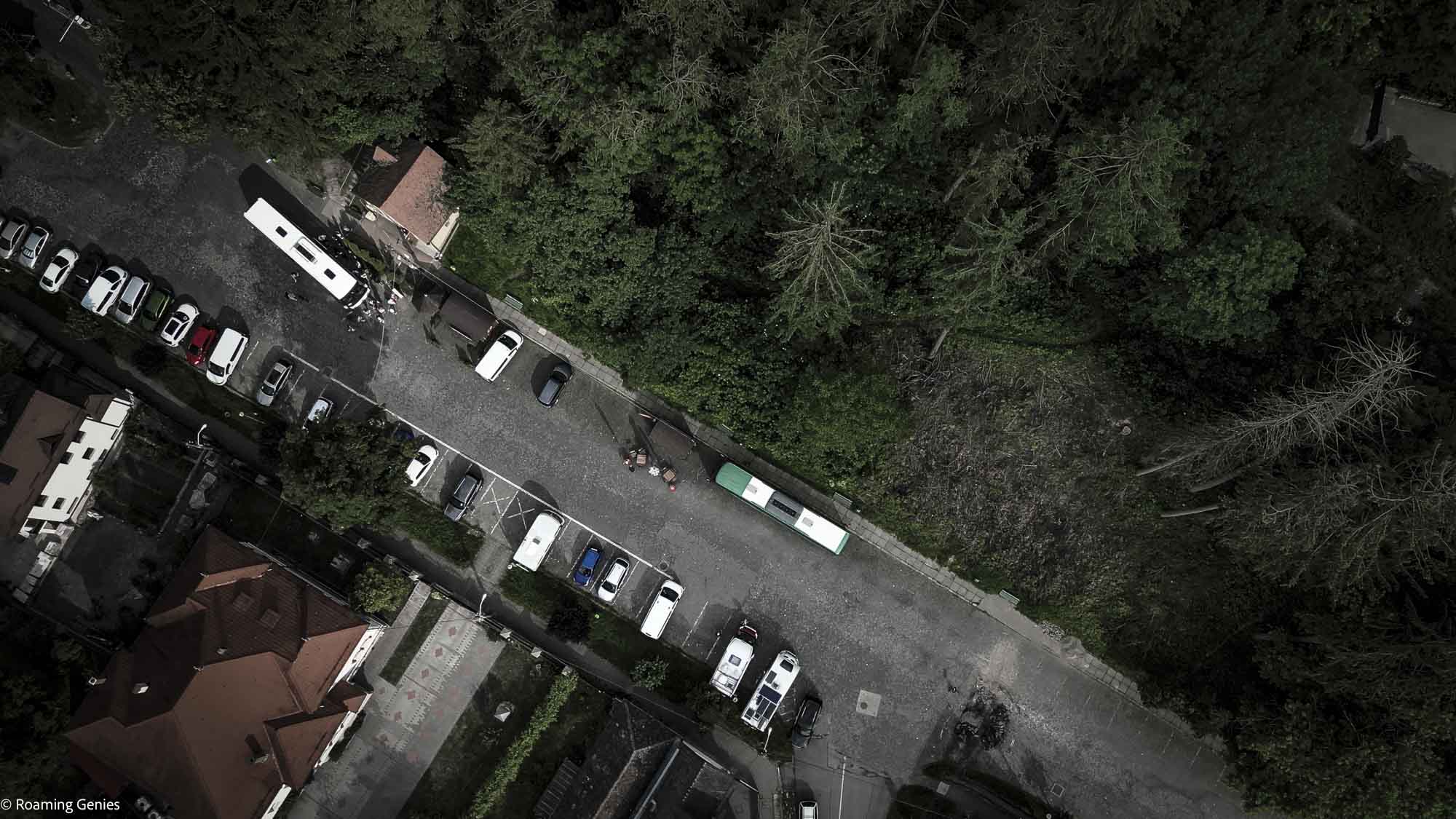
Let’s get one thing out of the way: we don’t do campsites. Too crowded, too structured, and honestly, where’s the fun in that? We prefer “creative camping”, which is a romantic way of saying we parked in a car park just outside the old citadel.


No electricity, no water hookup, and no reception desk trying to sell us shower tokens. But we did have:
-
A quiet spot under some trees
-
The occasional curious cat
-
A view of the medieval walls at sunrise
From the van, it was just a five-minute walk uphill into the fortified old town. A gentle warm-up for the legs, and by “gentle” I mean we arrived panting and questioning our life choices. But once you’re up there, it’s like stepping into a different world.
Sighișoara was founded in the 12th century by Transylvanian Saxons, German settlers who came to guard the frontier of the Kingdom of Hungary. It quickly became a hub of trade and craftsmanship, with 15 guild towers—each defending the town and proudly representing its craft, from tanners to tailors.
The most famous of these is the Clock Tower, a 14th-century beauty that stands at 64 meters tall and now houses a small museum. It was the town hall for centuries, and the mechanical clock still works, complete with rotating wooden figurines that mark the days of the week. Honestly, it’s kind of the Beyoncé of medieval towers—charismatic, photogenic, and always in the spotlight.
We climbed it (yes, more stairs) for sweeping views over the tiled rooftops and pastel houses. Worth every gasp.
You can’t talk about Sighișoara without mentioning Vlad the Impaler, aka Vlad Țepeș, the infamous Wallachian prince who inspired Bram Stoker’s Dracula. He was supposedly born here in 1431, and you can even visit his alleged birthplace—a mustard-yellow house with a plaque and a restaurant inside.
Now, was he really born here? Historians debate. But we’re not historians—we’re hungry travelers. So we sat inside and had soup. Not very Dracula of us, but hey, we were trying to avoid impaling our stomachs.
Sighișoara’s old citadel is still lived in—about 150 people call it home. Which means it doesn’t feel like a museum, but more like a village frozen in time, with actual life between the cracks. Laundry flaps out of centuries-old windows. Kids ride scooters over 500-year-old cobblestones. Tourists, like us, try to not trip over their own feet while staring at doors.
Useful Information
♦ Parkup:
Your content goes here. Edit or remove this text inline or in the
♦ Water:
module Content settings. You can also style every aspect of this content
♦Dining:
in the module Design settings and even apply custom CSS to this text in the module Advanced settings.

Some highlights:
-
Scholars’ Stairs – A long covered wooden staircase built in 1642 to help students reach the school above the town. It’s dark, creaky, and totally atmospheric. And no, you can’t skateboard down it. (We asked. Just kidding.)
-
Church on the Hill – A gothic masterpiece with 500-year-old murals and a Saxon cemetery next door. The view from the hill is stunning and well worth the hike.
-
Tailors’ Tower – Once the most heavily fortified part of the wall, it’s now one of the quietest corners of the citadel. A good place to sit, think, or eat a slightly crushed croissant from your backpack.
We love avoiding souvenir shops… until we don’t. On our last morning, we wandered into a little workshop run by a local artist who paints Transylvanian folk patterns on ceramics. I tried to act casual, like I wasn’t going to buy a mug. I bought a mug. Then dropped it 10 minutes later.
Mug: 1
Gravity: 0
Dignity: missing in actionBut what we really took away from Sighișoara were the little moments: the shopkeeper who gave us directions with hand gestures and three languages, the old woman selling honey from her garden, and the violinist playing near the clock tower at dusk.
Eating in Sighișoara is a delight—and surprisingly affordable. We had:
-
Ciorbă de burtă (tripe soup) – which I politely passed to my partner. She loves it. I… love her.
-
Goulash – spicy, hearty, and exactly what you want after walking 14,000 steps over cobbles.
-
Papanasi – fried Romanian doughnuts with sour cream and jam. Ridiculous. Glorious. Slightly dangerous if consumed in large quantities (we speak from experience)
We mostly avoided the main square restaurants and found smaller terraces tucked into side streets. Look for menus in one language and locals eating there—that’s always our rule.
Back in the motorhome, our evenings were simple. Pasta cooked on the gas stove. Wine poured into tin mugs. Lightroom open on the laptop. Clock tower glowing faintly in the distance. No power hookup, but plenty of charm.
There’s a strange joy in parking somewhere that costs nothing, has no reviews, and yet offers a front-row seat to something beautiful. Sighișoara gave us that. Not glamorous, but real—and real is what we’re here for.


For anyone visiting (with or without a van), here are some quick tips:
-
Parking: There’s a paid car park near the river (where we stayed). No facilities, but safe and central.
-
Wear good shoes: Cobblestones are not your friends. They are charming ankle assassins.
-
Avoid midday: Tour groups arrive like clockwork (pun intended). Early mornings and evenings are peaceful and cooler.
-
Local language: Most people speak some English, but a few Romanian phrases go a long way (and impress your Romanian partner).
-
Cash: Many small places still prefer cash, and ATMs aren’t everywhere in the old town.


LPG
Your content goes here. Edit or remove this text inline or in the module Content settings. You can also style every aspect of this content in the module Design settings and even apply custom CSS to this text in the module Advanced settings.
Water Sources
Your content goes here. Edit or remove this text inline or in the module Content settings. You can also style every aspect of this content in the module Design settings and even apply custom CSS to this text in the module Advanced settings.
Parkup
Your content goes here. Edit or remove this text inline or in the module Content settings. You can also style every aspect of this content in the module Design settings and even apply custom CSS to this text in the module Advanced settings.

Since we travel with our home-on-wheels, we love jumping off the beaten path. If you’re doing the same, consider these stops nearby:
-
Biertan – Another Saxon village with a fortified church that looks like a castle. Only 30 km away.
-
Viscri – Prince Charles owns a house here, and you’ll understand why. It’s rustic, quiet, and has incredible charm.
-
Mediaș – A lesser-known but beautiful town with more pastel buildings and fewer tourists.
Sighișoara makes a great base or stopover in a Transylvanian road trip, especially if you enjoy slow travel and storytelling architecture.
Sighișoara is one of those rare places where everything feels a little too perfect—but in the best possible way. You come for the history and the beauty, but what stays with you are the little things: the warm food, the quiet streets at dusk, the way strangers smile when they see you trying to pronounce “bulevardul”.
For us, it was a reminder of why we travel the way we do—slowly, simply, and without too many plans. Just two people, a motorhome, and a willingness to turn into any town that looks a little too pretty on the map.
Sighișoara delivered, and then some.
Your content goes here. Edit or remove this text inline or in the module Content settings. You can also style every aspect of this content in the module Design settings and even apply custom CSS to this text in the module Advanced settings.
Your content goes here. Edit or remove this text inline or in the module Content settings. You can also style every aspect of this content in the module Design settings and even apply custom CSS to this text in the module Advanced settings.
Your content goes here. Edit or remove this text inline or in the module Content settings. You can also style every aspect of this content in the module Design settings and even apply custom CSS to this text in the module Advanced settings.


Recent Comments